
Advanced Innovation & entrepreneurship
-
Introduction
-
MODULE 1: CAPITAL, VALUE, AND ORGANIZATION
Unit 1 Value Creation, the production results2 Topics|1 Quiz -
Unit 2 What is the capital and how is it build ?2 Topics|1 Quiz
-
Unit 3 : Division and organisation of Labor3 Topics|1 Quiz
-
Unit 4 : Capturing and Retaining Created Value2 Topics|1 Quiz
-
Unit 5 : Value chains and their fragmentation, maximizing the value captured2 Topics|1 Quiz
-
MODULE 2: INNOVATION AS A SOCIAL PROCESSUnit 6 : Adoption, a frontier between invention and innovation2 Topics|1 Quiz
-
Unit 7 : Innovation as a social process2 Topics|1 Quiz
-
Unit 8 : Location and Links in innovation3 Topics|1 Quiz
-
Unit 9 : Innovation process between companies2 Topics|1 Quiz
-
Unit 10 : The case of Knowledge industries3 Topics|1 Quiz
-
Unit 11: Values typologie2 Topics|1 Quiz
-
Unit 12 : Innovation as a process of value proposal3 Topics|1 Quiz
-
MODULE 3: DIGITAL TRANSFORMATION, INTANGIBLE CAPITAL AND RESPONSIBILITYUnit 13 : Digital transformation2 Topics|1 Quiz
-
Unit 14 : Intangible capital role in Innovation4 Topics|1 Quiz
-
Unit 15 : Public investment generating positive externalities in service of innovation3 Topics|1 Quiz
-
Unit 16 : Corporate social and environmental responsibility in an innovation context2 Topics|1 Quiz
-
Unit 17 : Innovative management methods of companies2 Topics|1 Quiz
-
Conclusion and ReferencesGeneral Conclusion
-
Bibliographic references
-
Final Assessment1 Quiz

Use the Listen button to hear the transcript. You can pause and resume the audio, and stop it at any time.
Note: You need to mute the video to hear the transcript in other languages instead of English or it will overlap with the video audio.
Please also keep in mind not all languages are supported by the TTS engine.
Gross Domestic Product: Construction and Meaning
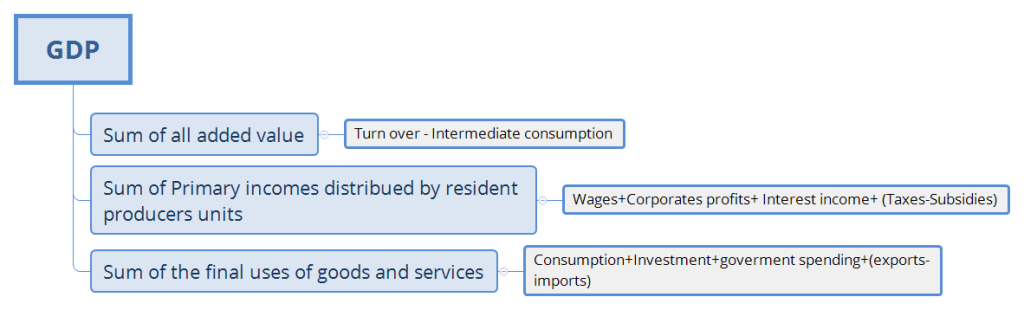
At the macroeconomic level, the value created by all productive activities in a territory is measured by Gross Domestic Product (GDP). This aggregate, whose development dates back to Kuznets’s work in the 1930s, can be calculated using three equivalent approaches: by summing value added (production approach), by summing distributed income (income approach), or by summing final expenditure (expenditure approach).
GDP enables the quantification of economic growth, that is, the increase in production volume from one period to another. This measure has become the cardinal indicator of national economic performance and the primary criterion for evaluating public policies.
Critique of the Indicator: The Stiglitz-Sen-Fitoussi Commission
The limitations of GDP as a measure of well-being have been extensively analyzed. The report of the Stiglitz-Sen-Fitoussi Commission (2009), commissioned by the French government, synthesized these critiques and proposed alternative indicators.
First, GDP excludes socially useful non-market activities. Domestic work, volunteering, and informal mutual aid are not counted, even though they substantially contribute to collective well-being. Thus, a parent raising children does not “produce” anything in GDP terms, while a childcare worker performing the same tasks creates market value—an asymmetry that reveals the conventions underlying the measurement.
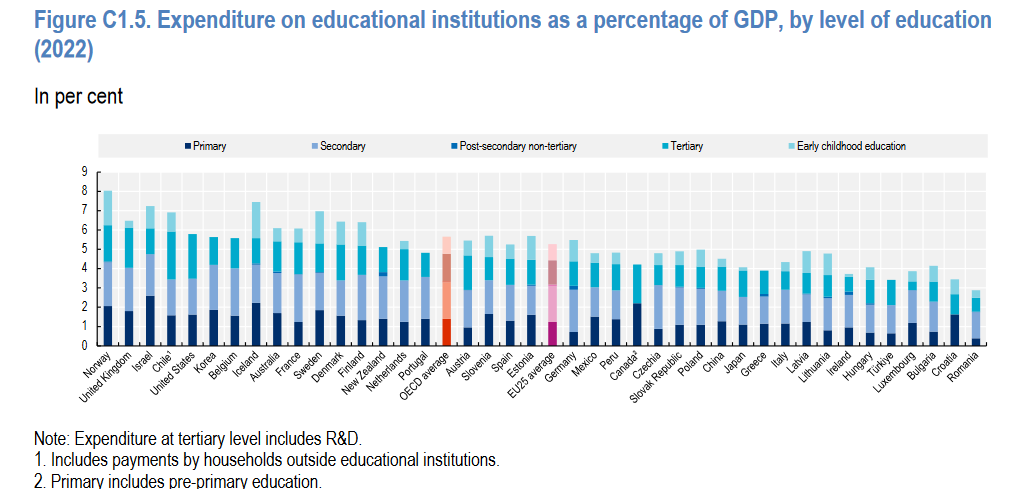
Second, the valuation of public services poses considerable methodological difficulties. How should the contribution of education or healthcare to national wealth be evaluated? Current accounting conventions, which value these services at their production cost, do not capture their true social value.
Third, GDP ignores negative externalities—environmental degradation, natural resource depletion—and non-monetary dimensions of well-being—security, quality of social relationships, existential satisfaction.
Innovation and Specific Measurement Challenges
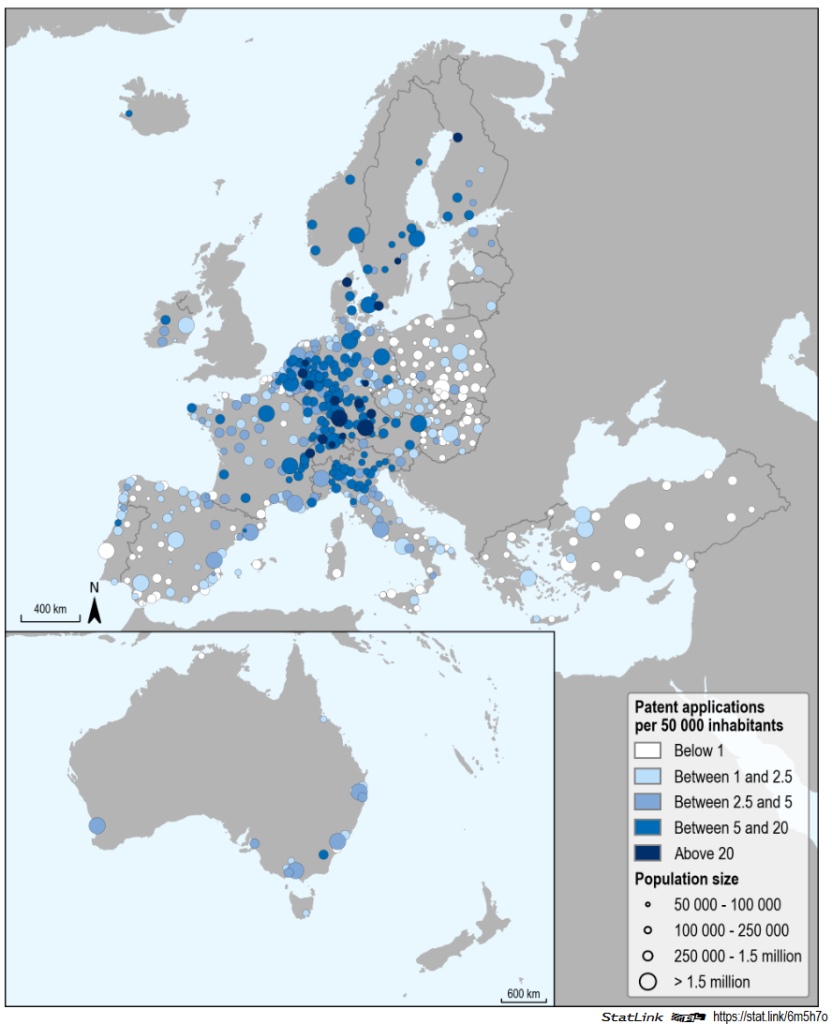
Innovation poses particularly acute measurement problems. Traditional indicators—R&D expenditure, patent counts—capture only an imperfect picture of innovative capacity (OECD, 2018). The Kodak case is emblematic: the company held a considerable portfolio of patents in digital photography, which did not prevent it from bankruptcy in the face of the disruption it had helped initiate.
Mazzucato (2018), in The Value of Everything, argues that the question of what “counts” as value is fundamentally political rather than merely technical. Measurement conventions reflect implicit normative choices about what deserves to be valued.