
Advanced Innovation & entrepreneurship
-
Introduction
-
MODULE 1: CAPITAL, VALUE, AND ORGANIZATION
Unit 1 Value Creation, the production results2 Topics|1 Quiz -
Unit 2 What is the capital and how is it build ?2 Topics|1 Quiz
-
Unit 3 : Division and organisation of Labor3 Topics|1 Quiz
-
Unit 4 : Capturing and Retaining Created Value2 Topics|1 Quiz
-
Unit 5 : Value chains and their fragmentation, maximizing the value captured2 Topics|1 Quiz
-
MODULE 2: INNOVATION AS A SOCIAL PROCESSUnit 6 : Adoption, a frontier between invention and innovation2 Topics|1 Quiz
-
Unit 7 : Innovation as a social process2 Topics|1 Quiz
-
Unit 8 : Location and Links in innovation3 Topics|1 Quiz
-
Unit 9 : Innovation process between companies2 Topics|1 Quiz
-
Unit 10 : The case of Knowledge industries3 Topics|1 Quiz
-
Unit 11: Values typologie2 Topics|1 Quiz
-
Unit 12 : Innovation as a process of value proposal3 Topics|1 Quiz
-
MODULE 3: DIGITAL TRANSFORMATION, INTANGIBLE CAPITAL AND RESPONSIBILITYUnit 13 : Digital transformation2 Topics|1 Quiz
-
Unit 14 : Intangible capital role in Innovation4 Topics|1 Quiz
-
Unit 15 : Public investment generating positive externalities in service of innovation3 Topics|1 Quiz
-
Unit 16 : Corporate social and environmental responsibility in an innovation context2 Topics|1 Quiz
-
Unit 17 : Innovative management methods of companies2 Topics|1 Quiz
-
Conclusion and ReferencesGeneral Conclusion
-
Bibliographic references
-
Final Assessment1 Quiz
Innovation Can Be a Source of Negative Externalities

Alvaro Pina Stranger 04/11/2026
Use the Listen button to hear the transcript. You can pause and resume the audio, and stop it at any time.
Note: You need to mute the video to hear the transcript in other languages instead of English or it will overlap with the video audio.
Please also keep in mind not all languages are supported by the TTS engine.
The Case of Teflon: Progress and Persistent Pollution
In 1938, chemist Roy Plunkett accidentally discovered Teflon in DuPont’s laboratories. This revolutionary innovation made it possible to create non-stick pans, waterproof clothing, and medical equipment. Undeniable progress for millions of people.
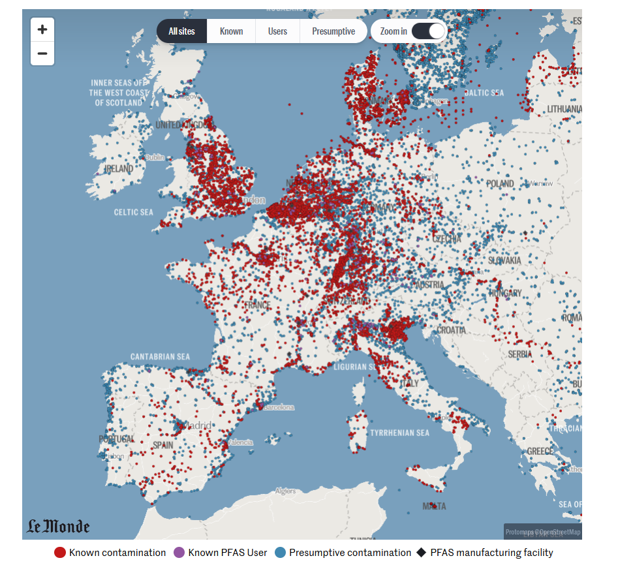
Seventy years later, we discover that PFAS, the chemical family of Teflon, are present everywhere: in the blood of 99% of the world population, in the oceans, in drinking water. These “forever chemicals” never degrade. And they are associated with cancers, fertility problems, and immune dysfunctions.
This story illustrates a reality often obscured in innovation discourse: innovating is not only about creating value. It is also, potentially, about generating negative externalities that may reveal themselves decades later.
Innovation Is Not Neutral
Innovation is not neutral. It transforms the world. And this transformation can have considerable social and environmental costs.
What is an externality in economics? It is a cost or benefit borne by a third party who did not choose to bear this cost or benefit.
When a factory pollutes a river, downstream inhabitants bear a cost: contaminated water, dead fish, health risks. They did not choose this situation and are not compensated.
This is a negative externality. The economist Arthur Pigou, as early as 1920, theorized this concept. Markets function efficiently only if all costs are internalized. Otherwise, we produce too much of what generates negative externalities.
Forms of Negative Externalities from Innovation
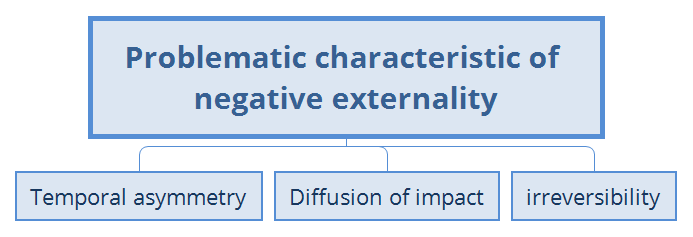
In the context of innovation, negative externalities take several forms: environmental, social, health-related, psychological, systemic. And they often share three problematic characteristics.
Temporal asymmetry: the benefits of innovation are immediate and visible. The costs, however, are often delayed, sometimes by several decades. Asbestos was considered a miracle material for a century before its deadly toxicity was understood. Innovators reap profits today; society pays the costs tomorrow.
Diffusion of impacts: the benefits of innovation are often concentrated; they benefit the innovating company and direct customers. But the costs are diffuse, distributed across all of society, the environment, or even the planet. A digital platform that optimizes logistics creates value for users. But its data centers consume the electricity of entire countries.
Irreversibility: some externalities are reversible; one can depollute a river. But others are permanent. Species extinction is definitive. Climate warming caused by CO₂ will persist for centuries. Microplastics in the ocean will not disappear.
Mechanisms of Persistence
If these negative externalities are so manifest, why do they persist? Several mechanisms explain this situation.
The information problem: when an innovation emerges, we do not always know its long-term effects. The scientists who developed CFCs for refrigerators did not know they would destroy the ozone layer. Uncertainty is inherent to innovation. But too often, the precautionary principle is ignored in favor of the growth imperative.
The structure of incentives: innovative companies are rewarded for the benefits they create, not penalized for the costs they impose on others. As long as a negative externality is not regulated or taxed, the company has no economic incentive to reduce it.
Power asymmetry: actors who benefit from innovation have the resources to influence regulation. Victims of externalities—local communities, future generations, ecosystems—do not have the same means to make their voices heard. The tobacco industry denied the harmful nature of cigarettes for decades. The fossil fuel industry funded climate disinformation campaigns for forty years.
Path dependence: once a technology is massively adopted, it becomes very costly to go back, even when its harmful effects become evident. Infrastructure is built, investments are made, habits are formed. This is the concept of technological “lock-in” developed by Brian Arthur.
Innovation is therefore not intrinsically good. It is ambivalent. It creates value but can also destroy it. It solves problems but creates new ones, sometimes worse.