
Advanced Innovation & entrepreneurship
-
Introduction
-
MODULE 1: CAPITAL, VALUE, AND ORGANIZATION
Unit 1 Value Creation, the production results2 Topics|1 Quiz -
Unit 2 What is the capital and how is it build ?2 Topics|1 Quiz
-
Unit 3 : Division and organisation of Labor3 Topics|1 Quiz
-
Unit 4 : Capturing and Retaining Created Value2 Topics|1 Quiz
-
Unit 5 : Value chains and their fragmentation, maximizing the value captured2 Topics|1 Quiz
-
MODULE 2: INNOVATION AS A SOCIAL PROCESSUnit 6 : Adoption, a frontier between invention and innovation2 Topics|1 Quiz
-
Unit 7 : Innovation as a social process2 Topics|1 Quiz
-
Unit 8 : Location and Links in innovation3 Topics|1 Quiz
-
Unit 9 : Innovation process between companies2 Topics|1 Quiz
-
Unit 10 : The case of Knowledge industries3 Topics|1 Quiz
-
Unit 11: Values typologie2 Topics|1 Quiz
-
Unit 12 : Innovation as a process of value proposal3 Topics|1 Quiz
-
MODULE 3: DIGITAL TRANSFORMATION, INTANGIBLE CAPITAL AND RESPONSIBILITYUnit 13 : Digital transformation2 Topics|1 Quiz
-
Unit 14 : Intangible capital role in Innovation4 Topics|1 Quiz
-
Unit 15 : Public investment generating positive externalities in service of innovation3 Topics|1 Quiz
-
Unit 16 : Corporate social and environmental responsibility in an innovation context2 Topics|1 Quiz
-
Unit 17 : Innovative management methods of companies2 Topics|1 Quiz
-
Conclusion and ReferencesGeneral Conclusion
-
Bibliographic references
-
Final Assessment1 Quiz
Division of labor in innovation and innovation in organization

Alvaro Pina Stranger 04/11/2026
Use the Listen button to hear the transcript. You can pause and resume the audio, and stop it at any time.
Note: You need to mute the video to hear the transcript in other languages instead of English or it will overlap with the video audio.
Please also keep in mind not all languages are supported by the TTS engine.
Innovation as a Factor of Recomposition
Innovation transforms the division of labor inherited from the Taylorist-Fordist model. In that model, innovation was confined to design offices: engineers conceived, workers executed. This strict separation could suit incremental improvements to stable products and processes.
The complexity and acceleration of contemporary technologies upset this configuration. Innovation becomes too complex to be the work of an individual or isolated department, however brilliant. The division of innovative labor organizes itself in new ways.
Horizontalization and Decompartmentalization
First, innovation spreads horizontally within organizations. Cross-functional project teams replace siloed functional departments. Engineers, designers, marketers, and users collaborate from the upstream phases of the process.
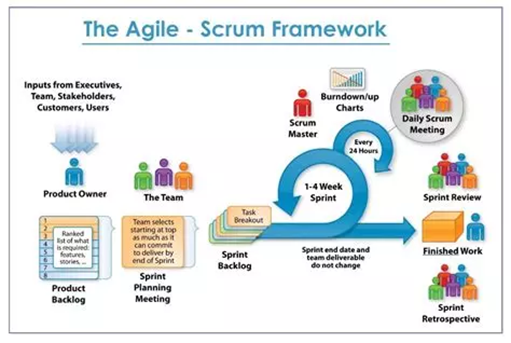
Agile methods, formalized in the Manifesto for Agile Software Development (Beck et al., 2001), systematize this approach: short cycles (sprints), frequent iterations, continuous feedback, permanent adaptation. The classic linear model—specification, design, development, testing, deployment—gives way to iterative loops.
Open Innovation and Networks
Second, innovation crosses organizational boundaries. The concept of open innovation, theorized by Chesbrough (2003), designates the inbound and outbound knowledge flows that traverse firm boundaries. Customers, suppliers, university laboratories, startups, and even competitors may contribute to the innovative process.
Free software projects like Linux or collaborative encyclopedias like Wikipedia demonstrate that thousands of contributors can coordinate their efforts without formal hierarchy or contractual links. The division of innovative labor becomes reticular, organized in networks rather than pyramids.
Geography of Innovation: Clusters and Ecosystems
Third, the spatial dimension of innovation is transformed. Closed laboratories give way to open spaces that favor interactions: fab labs, incubators, coworking spaces, industrial clusters.
Saxenian’s (1994) work on Silicon Valley highlighted the importance of local innovation ecosystems. The Valley is not merely a collection of firms; it is a milieu where ideas, talents, and capital circulate, where failures are tolerated and experiences shared. Geographic proximity remains crucial, even in the digital age, because it facilitates informal interactions and the transmission of tacit knowledge.
Temporal Acceleration
Fourth, the temporality of innovation is compressed. The classic linear model—from basic research to commercialization—fades. Cycles accelerate and overlap. Google launches services in “perpetual beta,” continuously improved through user feedback. Innovation becomes permanent and incremental rather than punctual and radical.
Governance Challenges of Distributed Innovation
This new division of innovative labor poses unprecedented governance challenges. How can intellectual property be protected when innovation is co-produced? How can contributors who are not employees be remunerated and motivated? How can coordination occur without formal hierarchy?
Answers remain experimental: open licenses (Creative Commons, GPL), symbolic rewards (reputation, peer recognition), participatory governance mechanisms. We are traversing a transitional period whose institutional rules are not yet stabilized.
Organization as an Object of Innovation
Innovation no longer concerns only products and processes; it extends to organization itself. Firms innovate in their structures, decision processes, and coordination modes.
Spotify developed an original organizational model based on “squads”—small autonomous teams of a maximum of eight people functioning as internal startups. Squads regroup into “tribes” sharing an activity domain, while cross-functional “guilds” ensure skill sharing. This fluid matrix structure aims to reconcile agility and coordination at scale.
Valve, the video game publisher, has abolished all formal hierarchy. There are no titles, no superiors, no project assignment processes. Employees freely choose the projects to which they contribute and collectively determine remunerations. Offices mounted on wheels can be reconfigured according to needs. This organization represents an extreme form of self-organization.
Haier, the Chinese home appliance giant, has transformed itself into a platform grouping several thousand internal micro-enterprises. Each unit of 10-15 people has complete autonomy in strategy, recruitment, and compensation matters. These units contract with each other or with external partners. The company becomes an internal market governed by quasi-market mechanisms.
Motivations and Limits of Organizational Innovation
These organizational innovations respond to identified constraints:
- Responsiveness: pyramidal structures react too slowly to technological and competitive changes.
- Creativity: innovation often emerges from the margins, not from the top. Flexible structures better capture weak signals.
- Engagement: new generations of workers aspire to autonomy and meaning, not obedience.
However, these models present potential perverse effects. Proclaimed autonomy may mask new forms of pressure. At Netflix, freedom comes with an intense performance culture where everyone is constantly evaluated by peers. The removal of formal hierarchy can generate more opaque informal hierarchies, where power accrues to charismatic personalities or networks of connivance.
The injunction to permanent innovation can prove exhausting. Continuous change, perpetual questioning, and constant learning generate specific occupational pathologies. Startup culture produces its burnouts.
Fractures and Polarization
The knowledge economy generates a polarization of the employment structure. On one side, “symbolic analysts” (Reich, 1991)—data analysts, designers, strategists—capture an increasing share of created value. On the other, click workers, content moderators, and platform delivery workers face precarity and low wages.
Artificial intelligence accelerates this recomposition. Routine cognitive tasks—accounting, standardized diagnosis, formulaic writing—are progressively automated. The boundary between human and machine is being redrawn. Humans retain—for now—a comparative advantage in creativity, empathy, and ethical judgment.
In this context of organizational fluidity, Durkheim’s question of social solidarity arises with renewed urgency: how can bonds be created in organizations undergoing permanent recomposition? How can society be built when everything is constantly changing?