
Advanced Innovation & entrepreneurship
-
Introduction
-
MODULE 1: CAPITAL, VALUE, AND ORGANIZATION
Unit 1 Value Creation, the production results2 Topics|1 Quiz -
Unit 2 What is the capital and how is it build ?2 Topics|1 Quiz
-
Unit 3 : Division and organisation of Labor3 Topics|1 Quiz
-
Unit 4 : Capturing and Retaining Created Value2 Topics|1 Quiz
-
Unit 5 : Value chains and their fragmentation, maximizing the value captured2 Topics|1 Quiz
-
MODULE 2: INNOVATION AS A SOCIAL PROCESSUnit 6 : Adoption, a frontier between invention and innovation2 Topics|1 Quiz
-
Unit 7 : Innovation as a social process2 Topics|1 Quiz
-
Unit 8 : Location and Links in innovation3 Topics|1 Quiz
-
Unit 9 : Innovation process between companies2 Topics|1 Quiz
-
Unit 10 : The case of Knowledge industries3 Topics|1 Quiz
-
Unit 11: Values typologie2 Topics|1 Quiz
-
Unit 12 : Innovation as a process of value proposal3 Topics|1 Quiz
-
MODULE 3: DIGITAL TRANSFORMATION, INTANGIBLE CAPITAL AND RESPONSIBILITYUnit 13 : Digital transformation2 Topics|1 Quiz
-
Unit 14 : Intangible capital role in Innovation4 Topics|1 Quiz
-
Unit 15 : Public investment generating positive externalities in service of innovation3 Topics|1 Quiz
-
Unit 16 : Corporate social and environmental responsibility in an innovation context2 Topics|1 Quiz
-
Unit 17 : Innovative management methods of companies2 Topics|1 Quiz
-
Conclusion and ReferencesGeneral Conclusion
-
Bibliographic references
-
Final Assessment1 Quiz

Use the Listen button to hear the transcript. You can pause and resume the audio, and stop it at any time.
Note: You need to mute the video to hear the transcript in other languages instead of English or it will overlap with the video audio.
Please also keep in mind not all languages are supported by the TTS engine.
Durkheim and Organic Solidarity
In 1913, in Ford’s factories, a worker tightened a bolt every fifty seconds, eight hours a day. How could modern societies accept this transformation of human beings into machine auxiliaries?
To understand this phenomenon, we must turn to the sociological analysis of Émile Durkheim (1893). In The Division of Labor in Society, Durkheim does not conceive of the division of labor as a mere technique of productive organization; he sees in it the very foundation of social cohesion in modern societies.
Durkheim distinguishes two forms of solidarity. In traditional societies, mechanical solidarity predominates, based on similarity: individuals share the same beliefs, practices, and lifestyles. Tradition and collective consciousness ensure group cohesion.
Modern societies function differently. Cohesion rests on functional interdependence—what Durkheim calls “organic solidarity.” Like the organs of a body, each individual fulfills a specialized function. The baker depends on the doctor, who depends on the teacher, who depends on the transporter. This interdependence creates a new type of social bond.
Normativity as Functional Necessity
The interdependence arising from the division of labor generates a need for coordination. When tasks are specialized, synchronized schedules, quality standards, and common procedures are required. Norms are no longer traditions inherited from the past; they become functional necessities demanded by cooperation among specialists.
It is this analytical framework that enables us to understand the social acceptance of industrial standardization. Modern societies do not passively submit to normalization; they demand it because it makes large-scale coordination possible.
Taylor and Scientific Management
Frederick Taylor (1911), in The Principles of Scientific Management, systematizes this logic of normalization. An engineer by training, Taylor observes steelworkers and notes that each uses idiosyncratic methods. His project consists of scientifically determining the “one best way” to accomplish each task.
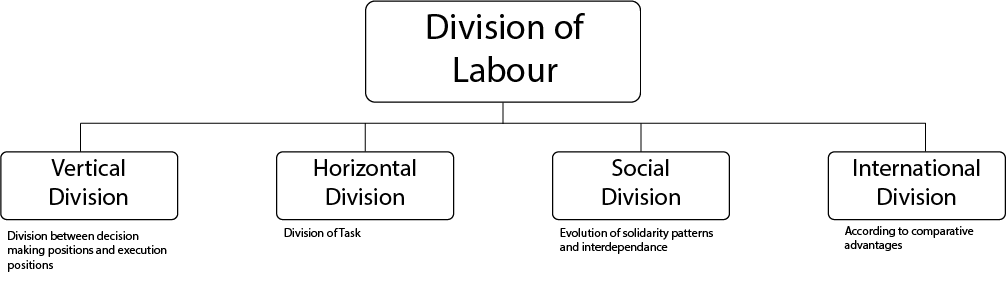
Taylor proceeds through time-and-motion studies, analytical decomposition of gestures, and calculation of optimal rhythms. He establishes a dual division of labor:
- Horizontal division: task fragmentation. Each worker performs a simple, repetitive operation.
- Vertical division: separation between conception and execution. Methods engineers design procedures; workers apply them without being able to modify them.
Fordism: Systematization and Extension
Henry Ford radicalizes Taylorian principles with the introduction of the assembly line in 1913. The worker remains stationary; it is the product in progress that moves. The work rhythm is no longer determined by the worker but by the speed of the line. The norm is inscribed in the technical apparatus itself.
Productivity gains were spectacular. The assembly time for an automobile dropped from twelve hours to ninety-three minutes. Unit costs collapsed; the Model T’s price became accessible to middle classes.
This organization intensifies the interdependence described by Durkheim. The slightest delay, the slightest failure at one point in the chain paralyzes the entire system. Millions of people are connected in a network of interdependencies extending to suppliers, transporters, and distributors. Each worker is simultaneously indispensable and substitutable.
Hierarchies and Inequalities from the Division of Labor
The division of labor generates occupational hierarchies that do not necessarily reflect the social utility of activities. The distinction between white-collar and blue-collar workers, between designers and executors, structures representations and remunerations. A trader earns income incomparable to that of a nurse, although the social contribution of their respective activities could be evaluated inversely.
This hierarchization has a gendered dimension. Labor sociology research (Maruani, 2017) shows that women remain concentrated in care and education professions, which are structurally less valued. The “glass ceiling” limiting their access to design and management positions persists despite legislative changes.
The division of labor has acquired an international dimension with the globalization of value chains. Design and command functions remain located in Northern countries; resource extraction and assembly are relocated to the South. A contemporary smartphone mobilizes components and operations distributed across more than forty countries, each capturing an unequal fraction of the final value (Gereffi & Fernandez-Stark, 2016).
Limits and Crises of the Taylorist-Fordist Model
The Taylorist-Fordist model today manifests its limits. Absenteeism, occupational pathologies, and disengagement testify to a crisis of meaning at work. Working conditions surveys (DARES, 2019) document the persistence of physical hardship and the emergence of psychosocial risks associated with work intensification.
The Covid-19 pandemic revealed the fragility of hyper-specialized systems. Jobs qualified as “essential”—healthcare personnel, cashiers, delivery workers—proved indispensable for social functioning, while remaining poorly paid and under-recognized.
Hyper-specialization also generates systemic risks at the global level. A localized blockage—closure of a semiconductor factory, obstruction of a maritime canal—can paralyze planetary production chains.
The fundamental question posed by Durkheim retains its relevance: the division of labor creates bonds, but these bonds can be a source of oppression as well as emancipation. The contemporary challenge consists of inventing forms of coordination that preserve efficiency gains while respecting human dignity.