
Advanced Innovation & entrepreneurship
-
Introduction
-
MODULE 1: CAPITAL, VALUE, AND ORGANIZATION
Unit 1 Value Creation, the production results2 Topics|1 Quiz -
Unit 2 What is the capital and how is it build ?2 Topics|1 Quiz
-
Unit 3 : Division and organisation of Labor3 Topics|1 Quiz
-
Unit 4 : Capturing and Retaining Created Value2 Topics|1 Quiz
-
Unit 5 : Value chains and their fragmentation, maximizing the value captured2 Topics|1 Quiz
-
MODULE 2: INNOVATION AS A SOCIAL PROCESSUnit 6 : Adoption, a frontier between invention and innovation2 Topics|1 Quiz
-
Unit 7 : Innovation as a social process2 Topics|1 Quiz
-
Unit 8 : Location and Links in innovation3 Topics|1 Quiz
-
Unit 9 : Innovation process between companies2 Topics|1 Quiz
-
Unit 10 : The case of Knowledge industries3 Topics|1 Quiz
-
Unit 11: Values typologie2 Topics|1 Quiz
-
Unit 12 : Innovation as a process of value proposal3 Topics|1 Quiz
-
MODULE 3: DIGITAL TRANSFORMATION, INTANGIBLE CAPITAL AND RESPONSIBILITYUnit 13 : Digital transformation2 Topics|1 Quiz
-
Unit 14 : Intangible capital role in Innovation4 Topics|1 Quiz
-
Unit 15 : Public investment generating positive externalities in service of innovation3 Topics|1 Quiz
-
Unit 16 : Corporate social and environmental responsibility in an innovation context2 Topics|1 Quiz
-
Unit 17 : Innovative management methods of companies2 Topics|1 Quiz
-
Conclusion and ReferencesGeneral Conclusion
-
Bibliographic references
-
Final Assessment1 Quiz

Use the Listen button to hear the transcript. You can pause and resume the audio, and stop it at any time.
Note: You need to mute the video to hear the transcript in other languages instead of English or it will overlap with the video audio.
Please also keep in mind not all languages are supported by the TTS engine.
Innovation as a Collective Phenomenon
Innovation is no longer—and probably never was—the work of a solitary genius. Even the first telescope, often attributed to Galileo, resulted from collective efforts. It reused the spyglass already employed in France and Holland.
Innovation emerges in communities. In specific places where ideas circulate, clash, and transform. This chapter examines these communities and shows why “where” matters as much as “what.”
Definition and Characteristics of Innovation Communities
An innovation community is a group of actors—entrepreneurs, researchers, investors, institutions—who share a space, physical or virtual, and collaborate on innovative projects.
It is more than a simple group. It is an ecosystem with its rules, its culture, its rituals.
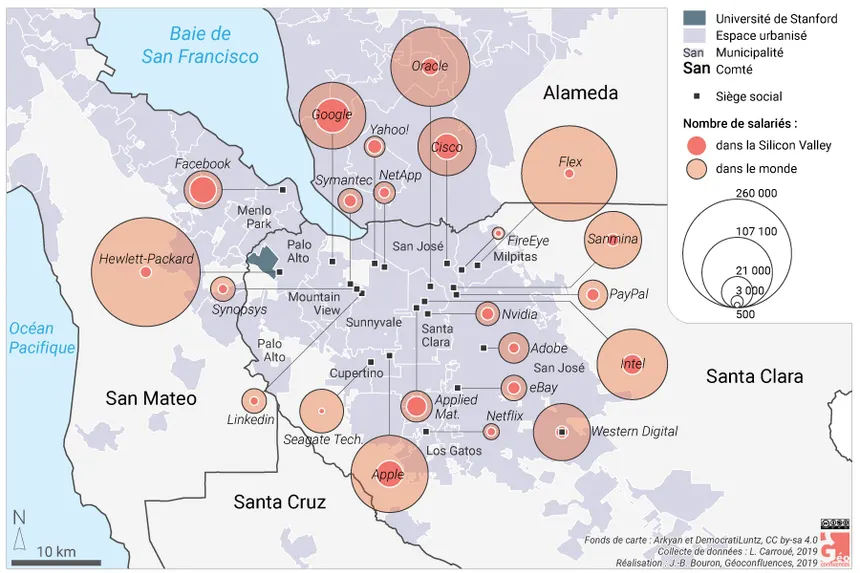
Consider Silicon Valley. It is not merely a collection of technology companies. It is a risk culture. Failure is considered learning, not shame. It is a dense network where an engineer can meet an investor in a small café. This proximity accelerates innovation.
Clusters: Porter’s Contribution
Porter (1998) theorized this phenomenon under the term cluster. He shows that geographic concentration creates competitive advantage through links between firms, suppliers, and institutions.
Within these communities, three mechanisms operate:
Tacit knowledge flows: this knowledge is not written in books. It is learned by observing, doing, talking. This is why some clusters are difficult to replicate. Swiss watchmaking in the Jura is one example.
Organized serendipity: encounters appear fortuitous but are actually facilitated by space design. Campuses, cafés, shared spaces create opportunities for meeting. Google designs its premises to mix teams.
Coopetition: actors are simultaneously in competition and cooperation. At Sophia Antipolis, companies fight for markets but share laboratories and research tools.
Diversity of Community Forms
Innovation communities take varied forms. Some form around values (Linux, Wikipedia). Others around passions (Arduino, Lego fans). Others are commercial and entrepreneurial. Others scientific. Many are hybrid.
Each form produces a different type of innovation: incremental innovation in mature clusters, radical innovation in creative districts, agile innovation in digital hubs.
Why Does Place Still Matter in the Digital Age?
Three reasons explain the persistent importance of place:
Social embeddedness: trust takes time to build. It grows from shared values, a common history. Motorsport Valley in the UK illustrates this phenomenon: decades of links connect teams, suppliers, and universities.
Local institutions: each place possesses its rules, formal and informal. In Shenzhen, creative copying is tolerated. This “shanzhai” culture enabled a hardware boom.
Specific resources: certain innovations require local assets. Boston biotechnology needs nearby hospitals, researchers, and laboratories.
Silicon Valley versus Route 128: Saxenian’s Contribution
Saxenian (1994), in Regional Advantage, compares two American regions: Silicon Valley and Route 128 around Boston. She demonstrates that culture and organization shape innovation trajectories.
Silicon Valley, with its open culture, inter-firm mobility, and dense networks, surpassed Route 128, where large vertically integrated companies maintained a culture of secrecy and hierarchy.
Innovation communities teach us that innovation is not merely about ideas. It is about context, relationships, networks, proximity.