Advanced Innovation & entrepreneurship
-
Introduction
-
MODULE 1: CAPITAL, VALUE, AND ORGANIZATION
Unit 1 Value Creation, the production results2 Topics|1 Quiz -
Unit 2 What is the capital and how is it build ?2 Topics|1 Quiz
-
Unit 3 : Division and organisation of Labor3 Topics|1 Quiz
-
Unit 4 : Capturing and Retaining Created Value2 Topics|1 Quiz
-
Unit 5 : Value chains and their fragmentation, maximizing the value captured2 Topics|1 Quiz
-
MODULE 2: INNOVATION AS A SOCIAL PROCESSUnit 6 : Adoption, a frontier between invention and innovation2 Topics|1 Quiz
-
Unit 7 : Innovation as a social process2 Topics|1 Quiz
-
Unit 8 : Location and Links in innovation3 Topics|1 Quiz
-
Unit 9 : Innovation process between companies2 Topics|1 Quiz
-
Unit 10 : The case of Knowledge industries3 Topics|1 Quiz
-
Unit 11: Values typologie2 Topics|1 Quiz
-
Unit 12 : Innovation as a process of value proposal3 Topics|1 Quiz
-
MODULE 3: DIGITAL TRANSFORMATION, INTANGIBLE CAPITAL AND RESPONSIBILITYUnit 13 : Digital transformation2 Topics|1 Quiz
-
Unit 14 : Intangible capital role in Innovation4 Topics|1 Quiz
-
Unit 15 : Public investment generating positive externalities in service of innovation3 Topics|1 Quiz
-
Unit 16 : Corporate social and environmental responsibility in an innovation context2 Topics|1 Quiz
-
Unit 17 : Innovative management methods of companies2 Topics|1 Quiz
-
Conclusion and ReferencesGeneral Conclusion
-
Bibliographic references
-
Final Assessment1 Quiz

Use the Listen button to hear the transcript. You can pause and resume the audio, and stop it at any time.
Note: You need to mute the video to hear the transcript in other languages instead of English or it will overlap with the video audio.
Please also keep in mind not all languages are supported by the TTS engine.
The Scale of the Open Source Phenomenon
Linux runs 90% of global cloud servers. Android powers 70% of smartphones. These figures attest to considerable scale. But these innovations were not born in closed laboratories; they emerged from open online communities.
Open source begins with a simple idea: the source code is accessible to everyone. Anyone can read it, modify it, share it. This is a major reversal of the traditional innovation model.
16.2 The Inversion of the Traditional Paradigm
In the classical model, innovation is protected. Access is limited. Contribution is controlled. In open source, the logic inverts: instead of protecting ideas, they are shared; instead of selecting contributors, doors are opened.
Linux illustrates this approach. Launched in 1991 as a student project by Linus Torvalds, it is today maintained globally by thousands of developers working across many companies.
16.3 Transformations Induced by Open Source
This approach transforms innovation itself along three dimensions:
Ownership becomes collective. No single actor owns the idea.
Hierarchy becomes meritocratic. Influence derives from the quality of contributions, not status.
Motivation becomes intrinsic. Individuals contribute to learn, gain recognition, solve real problems.
Eric von Hippel (2005) analyzed this shift early on. His idea is simple: users do not merely consume; they also innovate.
GitHub as Social Infrastructure
GitHub is not merely a tool. It is a social infrastructure that enables large-scale collaboration. Launched in 2008, it today hosts millions of projects.
GitHub functions through three mechanisms:
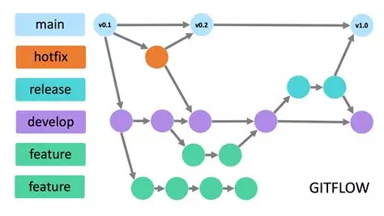
Version control: each modification is recorded over time. Teams can understand evolution. The project remembers its own history.
Forks and pull requests: anyone can copy a project, improve a part, then propose their modifications. Contribution is open by default.
Social layer: profiles, stars, and followers count. The profile shows work accomplished. Contributions build reputation.
Together, these elements create a meritocracy where skills matter more than status. A student can improve an expert’s code, even within large companies.
Principles of Open Source Innovation
Open source innovation follows clear principles:
Linus’s Law: “Given enough eyeballs, all bugs are shallow.” More contributors mean more problems detected early and fixed quickly.
Modular innovation: projects are divided into small parts. Each contributor focuses on one module. No one needs to master the whole.
Emergent standards: best practices are not imposed. They emerge through repeated collaboration. Over time, common solutions stabilize.
Transformation of Innovation Geography
Open source also changes the geography of innovation. Innovation is no longer local. Contributions come from everywhere—large metropolises and small countries. This creates new innovation centers where education and open culture matter more than size.
But this openness has its limits. Decision-making power is not equally shared. Governance often remains centralized. Large organizations play a key role. Thus we observe two dynamics: open contribution and centralized control.
The lesson remains strong: innovation no longer needs physical proximity. Collaboration can cross borders. But this does not replace everything. Human interaction still matters