
Advanced Innovation & entrepreneurship
-
Introduction
-
MODULE 1: CAPITAL, VALUE, AND ORGANIZATION
Unit 1 Value Creation, the production results2 Topics|1 Quiz -
Unit 2 What is the capital and how is it build ?2 Topics|1 Quiz
-
Unit 3 : Division and organisation of Labor3 Topics|1 Quiz
-
Unit 4 : Capturing and Retaining Created Value2 Topics|1 Quiz
-
Unit 5 : Value chains and their fragmentation, maximizing the value captured2 Topics|1 Quiz
-
MODULE 2: INNOVATION AS A SOCIAL PROCESSUnit 6 : Adoption, a frontier between invention and innovation2 Topics|1 Quiz
-
Unit 7 : Innovation as a social process2 Topics|1 Quiz
-
Unit 8 : Location and Links in innovation3 Topics|1 Quiz
-
Unit 9 : Innovation process between companies2 Topics|1 Quiz
-
Unit 10 : The case of Knowledge industries3 Topics|1 Quiz
-
Unit 11: Values typologie2 Topics|1 Quiz
-
Unit 12 : Innovation as a process of value proposal3 Topics|1 Quiz
-
MODULE 3: DIGITAL TRANSFORMATION, INTANGIBLE CAPITAL AND RESPONSIBILITYUnit 13 : Digital transformation2 Topics|1 Quiz
-
Unit 14 : Intangible capital role in Innovation4 Topics|1 Quiz
-
Unit 15 : Public investment generating positive externalities in service of innovation3 Topics|1 Quiz
-
Unit 16 : Corporate social and environmental responsibility in an innovation context2 Topics|1 Quiz
-
Unit 17 : Innovative management methods of companies2 Topics|1 Quiz
-
Conclusion and ReferencesGeneral Conclusion
-
Bibliographic references
-
Final Assessment1 Quiz
Company Networks as places of innovation

Alvaro Pina Stranger 04/11/2026
Use the Listen button to hear the transcript. You can pause and resume the audio, and stop it at any time.
Note: You need to mute the video to hear the transcript in other languages instead of English or it will overlap with the video audio.
Please also keep in mind not all languages are supported by the TTS engine.
From the Integrated Firm to the Network
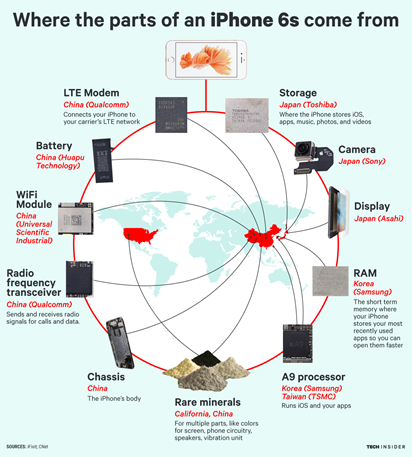
Airbus is not merely a company; it is a network. To build the A350, more than fifty partners contribute. Safran manufactures engines, Thales designs avionics, hundreds of SMEs produce sub-assemblies.
Innovation no longer occurs within a single firm. It occurs between firms.
From Vertical Integration to Networks
For decades, innovation followed another model. The dominant model was vertical integration. Ford produced everything itself, from tire rubber to body steel. Innovation was internal, protected, and tightly controlled.
This model reached its limits over time. Products became more complex. Technologies evolved more rapidly. R&D costs exploded. No single company could master all skills.
Powell (1990), in his article “Neither Market nor Hierarchy,” clearly analyzed this shift. Networks constitute a distinct form, neither pure market nor pure hierarchy. They combine specialization and flexibility. They share risks and knowledge.
Mechanisms of Network Innovation
Network innovation functions through several key mechanisms:
Co-design: partners are no longer simple suppliers; they become co-developers. In the automotive industry, this is common. Valeo or Bosch join early design phases. They bring deep expertise and innovate with manufacturers.
Innovation at interfaces: major innovations emerge at boundaries. The Start and Stop system is an example: it resulted from collaboration between automakers and electrical equipment suppliers.
Knowledge circulation: engineers move between companies. Shared platforms exchange data and models. This porosity accelerates learning, which becomes collective.
Dyer and Singh (1998) described this value under the term relational rents: value created by relationships, beyond what firms could do alone.
Forms of Innovation Networks
Innovation networks take different forms depending on sector and strategy:
Hub-and-spoke networks: a central firm orchestrates partners. Toyota is a classic case. Its supplier network follows long-term rules. Innovations rise from suppliers then spread through Toyota.
Horizontal networks: firms at the same level collaborate. SEMATECH is an example: Intel, IBM, and AMD work together. They compete in markets but cooperate in upstream research.
Platform ecosystems: one firm provides the architecture; others innovate on top. Android illustrates this logic. Millions of apps are external but the platform remains controlled.
Project alliances: temporary networks for one innovation. The Pfizer-BioNTech vaccine is a case: one firm brought mRNA technology, the other clinical trials and production.
Network Governance Challenges
Coordinating innovation across firms is difficult. It raises major challenges:
Intellectual property: who owns what in collective innovation? Firms use complex agreements—cross-licenses, patent pools, shared ownership. Bluetooth is an example where thousands of patents are shared.
Incentive alignment: each partner must truly invest. Contracts define milestones, penalties, and profit sharing.
Trust and control: too much control kills creativity; too little invites opportunism. Strong networks build calculated trust—formal rules plus human relationships.
This creates a paradox: the more complex the innovation, the more openness is needed. But openness also increases risk, which must be managed.
Network Fragilities
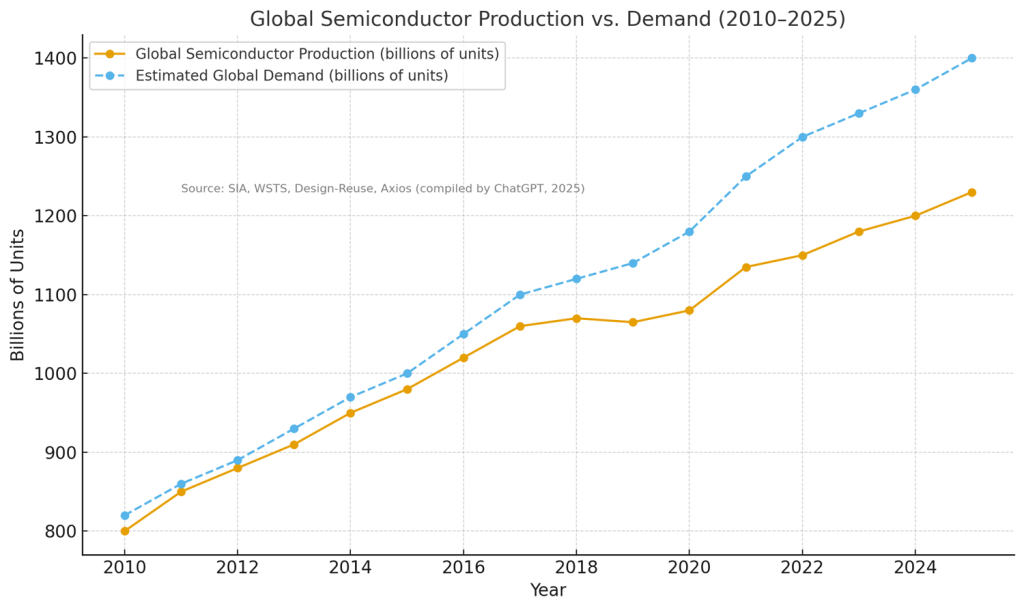
Innovation networks are not perfect. Mutual dependence creates vulnerability. The 2021 chip crisis showed this: entire industries halted.
Dispersed skills can weaken radical innovation. This is why some firms reintegrate. Tesla is one example.
Company networks transform innovation into a collective, distributed, and orchestrated process. Innovation becomes network management. The modern firm is not a fortress; it is a connected node in a global web of ideas.