
Advanced Innovation & entrepreneurship
-
Introduction
-
MODULE 1: CAPITAL, VALUE, AND ORGANIZATION
Unit 1 Value Creation, the production results2 Topics|1 Quiz -
Unit 2 What is the capital and how is it build ?2 Topics|1 Quiz
-
Unit 3 : Division and organisation of Labor3 Topics|1 Quiz
-
Unit 4 : Capturing and Retaining Created Value2 Topics|1 Quiz
-
Unit 5 : Value chains and their fragmentation, maximizing the value captured2 Topics|1 Quiz
-
MODULE 2: INNOVATION AS A SOCIAL PROCESSUnit 6 : Adoption, a frontier between invention and innovation2 Topics|1 Quiz
-
Unit 7 : Innovation as a social process2 Topics|1 Quiz
-
Unit 8 : Location and Links in innovation3 Topics|1 Quiz
-
Unit 9 : Innovation process between companies2 Topics|1 Quiz
-
Unit 10 : The case of Knowledge industries3 Topics|1 Quiz
-
Unit 11: Values typologie2 Topics|1 Quiz
-
Unit 12 : Innovation as a process of value proposal3 Topics|1 Quiz
-
MODULE 3: DIGITAL TRANSFORMATION, INTANGIBLE CAPITAL AND RESPONSIBILITYUnit 13 : Digital transformation2 Topics|1 Quiz
-
Unit 14 : Intangible capital role in Innovation4 Topics|1 Quiz
-
Unit 15 : Public investment generating positive externalities in service of innovation3 Topics|1 Quiz
-
Unit 16 : Corporate social and environmental responsibility in an innovation context2 Topics|1 Quiz
-
Unit 17 : Innovative management methods of companies2 Topics|1 Quiz
-
Conclusion and ReferencesGeneral Conclusion
-
Bibliographic references
-
Final Assessment1 Quiz

Use the Listen button to hear the transcript. You can pause and resume the audio, and stop it at any time.
Note: You need to mute the video to hear the transcript in other languages instead of English or it will overlap with the video audio.
Please also keep in mind not all languages are supported by the TTS engine.
Networks as an Innovation Resource
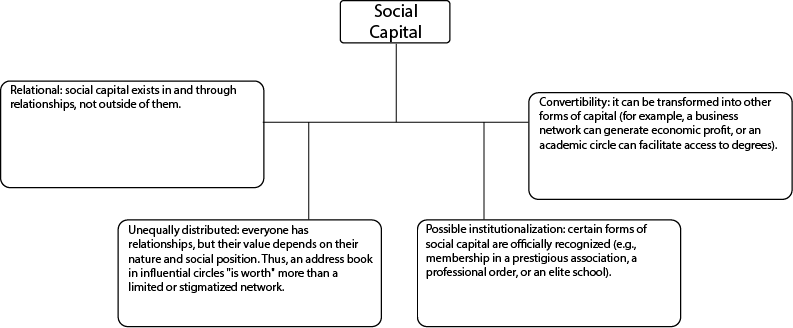
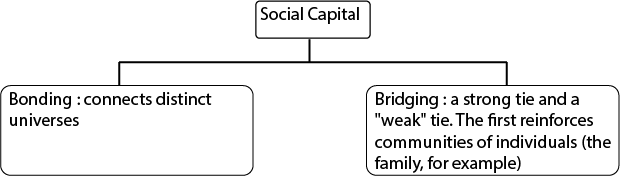
In certain sectors, innovation is built on networks and relationships. This is what we call social capital.
Take scientific communities. In biotechnology, for example, researchers form tight networks. They constantly exchange, change laboratories and companies. And new ideas circulate very quickly through these connections.
Think now of immigrant entrepreneurs. Chinese or Indian founders in Silicon Valley use their ties back to their home countries. They access suppliers, talent, markets, and technologies in their countries of origin. These transnational ties become a real competitive advantage.
Social movements work the same way. Associations and cooperatives build networks of solidarity. They test new economic models, often greener or fairer than traditional ones.
And of course, there is digital. The internet and social networks create new ways to collaborate. Online communities allow people from around the world to work together, co-create open source software or shared knowledge.
Key Ideas About Social Capital and Innovation
From all this, we can retain some key ideas about social capital and innovation.
Innovation is a social phenomenon. It is not only about technology or money. It depends on people and their relationships. For an innovation to succeed, researchers, entrepreneurs, investors, and users must work together.
Trust reduces risk. When people trust each other, they share information more easily, dare to invest in uncertain projects. Trust reduces the fear of failure and makes innovation easier.
Innovations spread through social networks. Some people are “opinion leaders.” They adopt new things first, then influence others. The more numerous and diverse your contacts, the faster you hear about new ideas and adopt them.
Not all groups have the same chances to innovate. Those with strong networks and high social status access opportunities more easily. Others are left behind. This creates “digital divides” and exclusion.
Innovation today often comes from collaboration between different organizations. Universities, companies, and public bodies work together. Good relationships help coordinate these complex partnerships.
Certain places are particularly favorable for innovation. In regions where people meet and exchange often—like Silicon Valley—the density of relationships stimulates creativity and knowledge sharing (Storper, 1997).
But there is also a downside. Social capital can slow innovation. Closed circles can block new ideas. Networks can protect existing elites and keep others out (Portes, 1998; Burt, 2005).