Advanced Innovation & entrepreneurship
-
Introduction
-
MODULE 1: CAPITAL, VALUE, AND ORGANIZATION
Unit 1 Value Creation, the production results2 Topics|1 Quiz -
Unit 2 What is the capital and how is it build ?2 Topics|1 Quiz
-
Unit 3 : Division and organisation of Labor3 Topics|1 Quiz
-
Unit 4 : Capturing and Retaining Created Value2 Topics|1 Quiz
-
Unit 5 : Value chains and their fragmentation, maximizing the value captured2 Topics|1 Quiz
-
MODULE 2: INNOVATION AS A SOCIAL PROCESSUnit 6 : Adoption, a frontier between invention and innovation2 Topics|1 Quiz
-
Unit 7 : Innovation as a social process2 Topics|1 Quiz
-
Unit 8 : Location and Links in innovation3 Topics|1 Quiz
-
Unit 9 : Innovation process between companies2 Topics|1 Quiz
-
Unit 10 : The case of Knowledge industries3 Topics|1 Quiz
-
Unit 11: Values typologie2 Topics|1 Quiz
-
Unit 12 : Innovation as a process of value proposal3 Topics|1 Quiz
-
MODULE 3: DIGITAL TRANSFORMATION, INTANGIBLE CAPITAL AND RESPONSIBILITYUnit 13 : Digital transformation2 Topics|1 Quiz
-
Unit 14 : Intangible capital role in Innovation4 Topics|1 Quiz
-
Unit 15 : Public investment generating positive externalities in service of innovation3 Topics|1 Quiz
-
Unit 16 : Corporate social and environmental responsibility in an innovation context2 Topics|1 Quiz
-
Unit 17 : Innovative management methods of companies2 Topics|1 Quiz
-
Conclusion and ReferencesGeneral Conclusion
-
Bibliographic references
-
Final Assessment1 Quiz
State Investment in Tangible Capital for Innovation—The Case of Cluster Formation

Alvaro Pina Stranger 04/11/2026
Use the Listen button to hear the transcript. You can pause and resume the audio, and stop it at any time.
Note: You need to mute the video to hear the transcript in other languages instead of English or it will overlap with the video audio.
Please also keep in mind not all languages are supported by the TTS engine.
Silicon Valley: Result of Public Investments
We have seen how positive externalities justify public intervention. Let us now explore how the State creates fertile ground for innovation through investments in tangible capital: infrastructure, equipment, physical spaces—particularly through cluster formation.
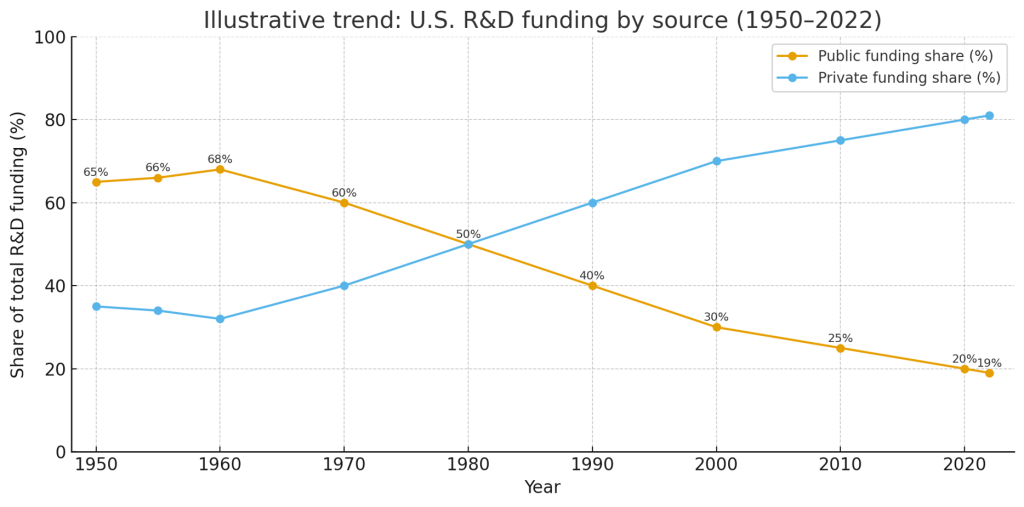
Let us begin with a historical example: Silicon Valley. It is not the result of chance alone or entrepreneurial genius alone. The American State invested massively: Stanford laboratories funded by the Department of Defense, transport infrastructure, high-capacity electrical networks. These tangible investments created the physical conditions for innovation
Infrastructure and Innovation
Transport infrastructure is crucial. The TGV in France does not only transport passengers. It creates innovation corridors by connecting research centers, universities, and companies. Grenoble became a major nanotechnology hub thanks, in part, to its rail connection with Lyon and Paris.
Fiber optic networks are another example. In the early 2000s, the Korean State invested massively in very high-speed broadband. The result? Korea became a global leader in video gaming, e-sports, and mobile technologies. Infrastructure preceded and enabled innovation
Clusters: Theory and Mechanisms
What is a cluster? A cluster is a geographic concentration of companies, universities, and institutions working in the same field. Michael Porter (1998) theorized how these concentrations create sustainable competitive advantages.
Sophia Antipolis for telecommunications. Toulouse for aeronautics. Boston for biotechnology. These clusters do not form spontaneously. They require massive and coordinated public investments.
Paul Krugman, Nobel Prize winner in economics in 2008, demonstrated something important. In his new economic geography, he showed that increasing returns and agglomeration economies create self-reinforcing dynamics.
The Case of the Saclay Plateau
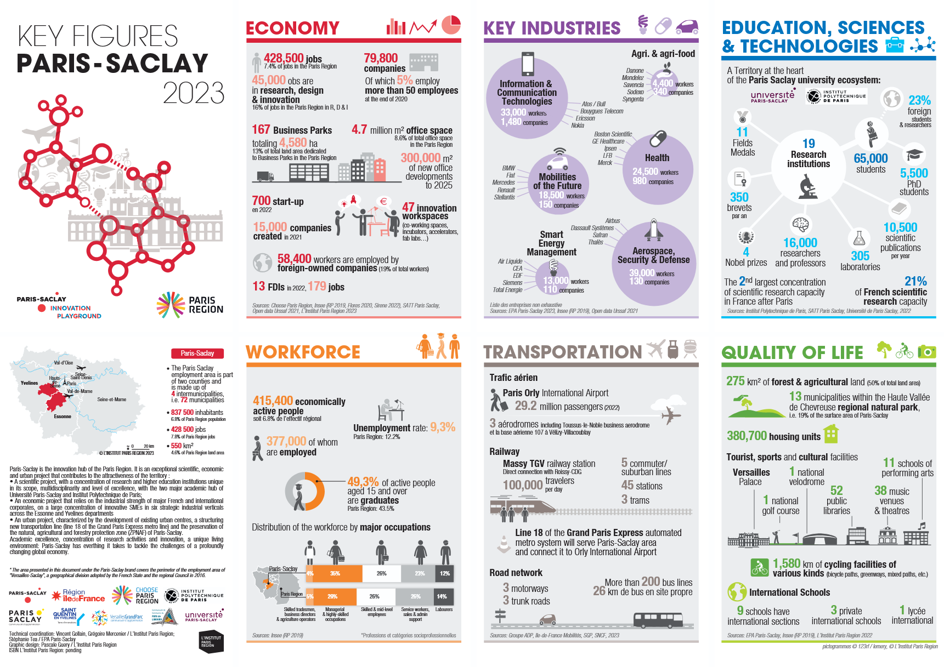
Take the case of the Saclay plateau in France. The State is investing 5 billion euros there: a new metro line, housing for researchers, shared laboratories, incubators.
Why? Because physical proximity generates exponential positive externalities. Researchers meet frequently. Students move easily from a laboratory to a startup. Companies share expensive equipment.
These investments create what are called “agglomeration economies.” The more innovative actors are concentrated, the more each benefits from the presence of others. It is a virtuous circle. And only the State can initiate it because returns on investment are too long and too diffuse for the private sector.
Shared Scientific Equipment
The State also finances scientific equipment that no single company could ever afford.
CERN, with its 27-kilometer particle accelerator, cost billions. But beyond fundamental physics, it generated unexpected innovations. The World Wide Web was born there. Medical imaging technologies advanced there. New data processing techniques were developed there.
In France, the synchrotrons SOLEIL or ESRF are giant microscopes used by thousands of researchers and companies. Pfizer studied protein structures there to develop drugs. L’Oréal analyzes its cosmetics there. Automobile manufacturers test new materials there. These shared infrastructures democratize access to high technology.
The Entrepreneurial State
Public investment in tangible capital is not limited to building roads and bridges. Mariana Mazzucato (2013), in her book The Entrepreneurial State, demonstrates something crucial: the State is not only a corrector of market failures but an active creator of markets and opportunities.
It creates the physical conditions for serendipity—those chance encounters that generate innovation. It offers tools that the market alone would never provide. It concentrates talent to multiply synergies.
Clusters like Silicon Valley, Cambridge, or Shenzhen are not historical accidents. They are the result of strategic and patient public investments.